Should I Pay Off My Car Loan Early? Weigh the Costs
Paying off your car loan early feels like an obvious win — until you run the real numbers. Here is how to check your contract for traps, weigh the payoff against investing, and handle the title and GAP refund after the last payment.
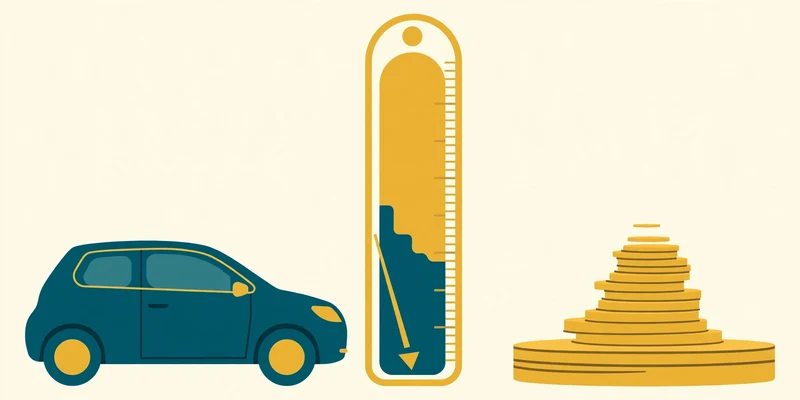
Key takeaways
- On a $25,000 loan at 7% APR over 60 months, the payment is $495.03 and total interest is $4,701.80. Adding $200 a month to the principal ends the loan in 41 months and saves $1,560.37.
- Most US auto loans are simple-interest with no prepayment penalty; precomputed (Rule of 78s) contracts, some credit-union loans, and buy-here-pay-here deals are the exceptions. Your contract is the authority.
- Pay early when the rate is high, the emergency fund is full, and higher-rate debt is gone. Keep the loan when the cash would earn more invested — or when you need the liquidity.
- After the final payment: claim your pro-rata GAP refund, confirm the lien release in writing, and make sure the title is in your name.
The real math: what early payoff saves on a $25,000 loan
Finance $25,000 at 7% APR on a 60-month term and the monthly payment is $495.03 — $4,701.80 in interest over five years, $29,701.80 all in. That total is the baseline your decision has to beat.
Now send an extra $200 a month, every extra dollar directed at the principal. The effective payment becomes $695.03, and the loan ends in 41 months instead of 60. Total interest falls to $3,141.43 — a reward of $1,560.37 saved and 19 months of payments erased. That is the simple-interest mechanism: each extra principal dollar stops interest accruing on that dollar, compounding over every remaining month. (It assumes a simple-interest loan, no prepayment penalty, and extras applied to principal — the next section shows how to verify all three.)
Step zero: read your contract for two traps
The first trap is a prepayment penalty — and it is rare on auto loans. Fewer than 10% of auto loans issued in recent years contain enforceable prepayment penalties, per Consumer Financial Protection Bureau data, and major banks and captive finance arms generally don’t charge them on standard loans. They cluster at credit unions with special rate programs and buy-here-pay-here dealers. Bankrate’s October 2026 guide adds that not all states allow these penalties, and no lender can charge one on a term over 60 months. Still, treat your contract as the authority: search the Truth in Lending disclosure for “prepayment penalty” and request a 10-day payoff quote before sending a large sum.
The second trap is how the interest is calculated. Most auto loans charge simple interest: interest accrues daily on the outstanding balance, so extra principal payments immediately reduce future interest. Some loans — mostly subprime — are precomputed, with all the interest baked in up front, often using the Rule of 78s, which front-loads it into the early payments. On a precomputed loan, paying ahead barely dents the total: one worked comparison found an extra $100 a month on a $30,000, 60-month, 8% loan saved about $1,100 and 10 months on simple interest — but under $150 on a precomputed loan. Federal law bars the Rule of 78s on loans longer than 61 months. Check your disclosure for “simple interest” versus “precomputed”.
The case for paying it off early
When neither trap applies, the argument for an early payoff is strong. You earn a guaranteed return equal to your APR — a risk-free 7% beats nearly every alternative a typical saver can access. Deleting a $300-to-$600 monthly payment frees serious cash flow, and your debt-to-income ratio falls, which mortgage underwriters love.
The case for keeping the loan — and the cash
Your emergency fund comes first: tying up cash in a depreciating car while you hold less than three to six months of expenses is backwards. Higher-rate debt comes first, too: credit-card balances at 20%+ APR dwarf auto-loan math (see our guide on how long it takes to pay off credit card debt). Do the opportunity-cost math: at a 3% auto APR, investing the extra cash has historically won, averaging roughly 7–10% a year; at 7% and up, the guaranteed payoff usually wins (our investment strategies overview can help). And don’t fear the credit-score footnote: closing your only installment account can dip your score slightly, but the effect is usually minor and temporary.
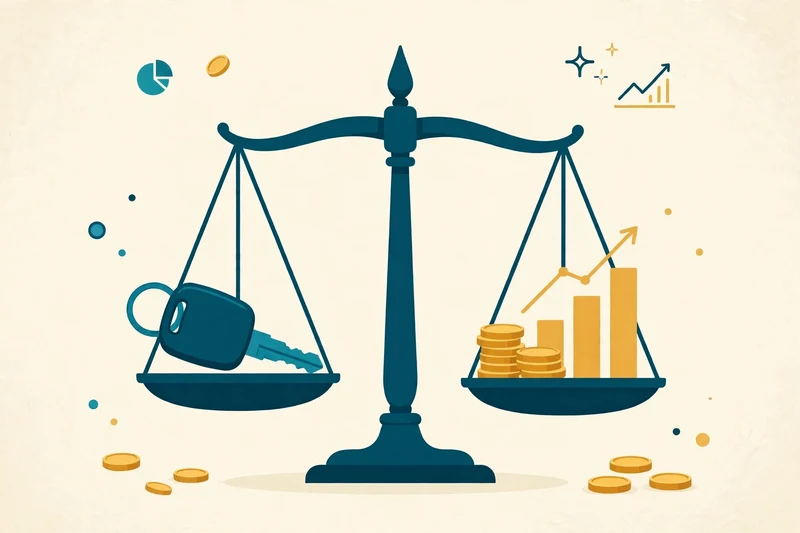
After the last payment: the paperwork that actually matters
The loan ending is a process, not a moment. Get the payoff confirmation and lien release in writing: the lender releases its lien, and the title transfers into your name. If the clean title hasn’t arrived within a few weeks, follow up with your state’s DMV.
Next, claim your GAP insurance refund. If you prepaid for GAP coverage or rolled it into the loan, you are generally owed a pro-rata refund of the unearned portion — the CFPB confirms consumers may be entitled to a refund on prepayment. Contact the GAP administrator or dealership with proof of payoff and request cancellation in writing. Also check extended warranties and service contracts — many are refundable pro-rata. Finally, review your insurance: the lienholder’s comprehensive/collision requirement ends with the loan.
Middle paths that still save real money
You don’t have to choose between a full early payoff and the minimum. Rounding up each payment — with a written instruction that extras apply to principal — captures most of the savings without draining your reserves. If the rate itself is the real problem but cash is tight, refinancing your auto loan to a lower rate or shorter term can cut the total cost without touching your savings.
Carrying other high-rate debt?
Kill the most expensive balances first — our snowball guide shows the fastest order.
Try the debt snowball methodSources & further reading
- Bankrate — Auto Loan Prepayment ClausesState rules and the over-60-months protection, updated Oct 2026.
- MoneyCrashers — Simple vs Precomputed Car Loan PayoffWorked comparison; Rule of 78s 61-month federal bar.
- Capital One — Should I Pay Off My Car Loan Early?Credit-mix effect, DTI, and payoff considerations.
- SoFi — Should I Pay Off My Car Loan Early?Pros, cons, and opportunity-cost framing.
- LegalClarity — GAP Insurance Refund GuidePro-rata refund mechanics; CFPB position on prepay refunds.