Renting vs Buying in 2026: The Real Maths
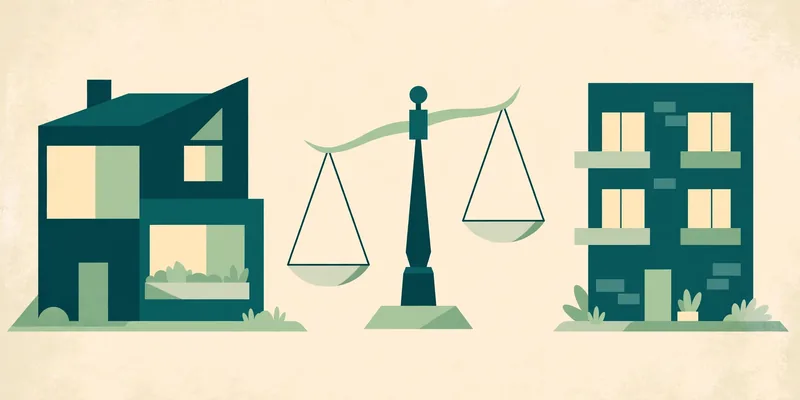
‘Rent is throwing money away’ is the most expensive sentence in personal finance — because in the early years, the mortgage wastes far more.
Key takeaways
- On a $450,000 home at 6.5%, owning costs about $38,800 in year one versus $28,800 to rent the equivalent. Renting wins — by roughly $10,000.
- The classic 5% rule is outdated at today’s rates: the honest unrecoverable cost of owning is closer to 8–9% of a home’s value a year.
- The maths improves with time: the gap narrows by about $1,200 a year. Owning’s yearly cost slips below the rent in about year six — but add everything up and, without appreciation, owning only pulls ahead after roughly twelve years.
- Home-price appreciation is the wild card — and transaction costs, 8–10% of the price per round trip, punish anyone who moves soon.
The right question
Most rent-vs-buy arguments compare the wrong numbers: this month’s rent against this month’s mortgage payment. That’s fiction. The real comparison is rent against the unrecoverable costs of owning — money that is gone forever even if the home holds its value. The 5% rule used to pack this into one number: owning costs about 5% of a home’s value a year (interest ~3%, property tax ~1%, maintenance ~1%), so if 5% of the price exceeded a year’s rent, you should rent. The instinct is sound, but it was built in low-rate years. At 6.5%, the interest ingredient alone outweighs the whole old recipe, and the honest 2026 figure is closer to 8–9% of value a year.
A worked example: the $450,000 home
Spend $450,000 with 20% down and you borrow $360,000 — at 6.5% for 30 years, that’s $2,275 a month, or $27,305 a year. (Freddie Mac’s survey averaged 7.28% on 1 October 2026; at that rate, year-one interest would be nearer $26,000 and renting’s lead bigger still.) In year one, almost all of it is interest: about $23,282 disappears, while only about $4,024 reduces the balance. Then the quieter costs: property tax at 1.1% is about $4,950; homeowner’s insurance at 0.35% adds $1,575; maintenance averages roughly 1% of value ($4,500) — lumpy, not smooth: quiet years and $9,000 roof years. Finally, the line most analyses skip: your $90,000 down payment could have earned perhaps $4,500 in year one at a modest 5% return. Total year-one ownership cost: about $38,800. Renting the equivalent home at $2,400 a month costs $28,800. Rent wins — by roughly $10,000.
How the maths shifts over time
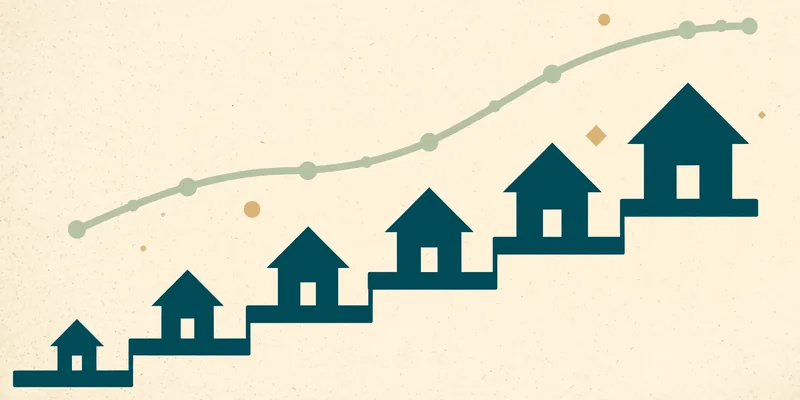
Year one is renting’s best year. After it, two forces narrow the gap by roughly $1,200 a year: the mortgage’s interest portion shrinks as you chip at the balance, and rents tend to rise — at 3% a year, that $28,800 becomes about $32,400 by year five. On these assumptions, owning’s yearly cost dips below the annual rent in about year six. Cumulative break-even is slower: add up everything spent — deposit earnings forgone included, selling costs not — and owning only pulls ahead around year twelve, assuming the home’s value never moves. Mostly hypothetical, of course: prices either grow (helping owning) or fall (punishing it).
The wild card: appreciation
Appreciation is the swing factor. At 3% a year, a $450,000 home gains about $13,500 in year one — enough, on paper, to erase renting’s $10,000 edge immediately. But ‘on paper’ is doing all the work: appreciation is unrealized, varies violently by postcode, and can reverse for a decade — ask anyone who bought in 2006. Treat it as a pleasant possibility, never as the reason to buy. Leverage cuts both ways.
The second wild card: transaction costs
Owning has enormous entry and exit fees: expect roughly 8–10% of the price in pure transaction costs over a round trip. Buy for $450,000 and you are out perhaps $13,500 in closing costs on day one; sell five years later at about $522,000 and agent fees take roughly $31,000. Move within a few years and those fees swallow the early appreciation whole — which is why the real question is how long you’ll stay.
When renting is clearly smarter
Staying under five years. Careers or circumstances that might relocate you. Markets with brutal price-to-rent ratios, where landlords are effectively subsidizing your shelter. And anyone who would sleep better never thinking about a water heater again. Renting also rewards discipline: invest the down payment and the monthly difference, and the maths gets kinder still.
When buying still wins
Staying put seven to ten years or more. Wanting insulation from rent inflation — your mortgage payment never inflates, though taxes and insurance do. Betting on your own discipline: the ‘forced saving’ of mortgage principal builds equity, growing from about $4,024 in year one to roughly $7,200 by year ten. And wanting leverage on appreciation: if the home gains 3%, that is 3% on $450,000, not on your $90,000 — a 15% paper return on the cash you put in.
The UK wrinkle
In the UK the same framework applies, with friction costs that sting even more. Stamp duty lands at £12,500 on a £450,000 purchase for non-first-time buyers; mortgage deals fix for 2 or 5 years rather than 30, so the rate side of the maths refreshes constantly; and leasehold service charges add a fee layer America mostly avoids. Run the rent-vs-buy calculator with the term set to your fixed-deal length — and count stamp duty as pure cost.
Try it yourself
Run your own numbers — price, rent, rates, and tenure — through the calculator built for exactly this question.
Open the rent vs buy calculatorSources & further reading
The rate figure and UK tax bands come from the official sources below; the worked example is our own arithmetic, shown in full.
- Freddie Mac — Primary Mortgage Market SurveyWeekly average US rates; 7.28% for the 30-year fixed on 1 October 2026.
- Consumer Financial Protection Bureau — What fees are paid when closing on a mortgage?What sits inside US closing costs, and who pays each item.
- GOV.UK — Stamp Duty Land Tax: residential property ratesThe bands behind the £12,500 stamp-duty figure.
Frequently asked questions
Should I buy a house in 2026?
If you’ll stay put 7–10 years, have 20% down plus an emergency fund, and the cost fits comfortably — yes. Otherwise, rent confidently: at today’s rates it’s a sound choice, not a consolation prize.
How long do I need to stay for buying to beat renting?
On this guide’s numbers, owning’s yearly cost dips below the rent in about year six, and cumulative break-even — everything spent, added up — arrives around year twelve, before selling costs. Modest price growth compresses that a lot, as long as you stay long enough to capture it.
Is renting just throwing money away?
In year one at 6.5%, only about $4,000 of a $27,000 year’s mortgage payments builds equity — the rest is interest, tax, insurance and maintenance, all gone forever. Rented or owned, you pay for shelter; one route just lets you see the invoice.
What does a lower mortgage rate change?
A lot. At 5%, a $360,000 loan costs about $1,933 a month and year-one interest drops from $23,282 to roughly $17,900. Renting’s lead shrinks fast as rates fall — the answer depends on the year, not just the numbers.
What is the 5% rule?
The old rule of thumb that owning costs 5% of a home’s value a year in unrecoverable costs. It was built when mortgage rates were near 3%; at 6.5% the honest figure is closer to 8–9% — use the rent-vs-buy calculator for the real number.