Refinance Auto Loan: When It Saves You Money and How to Do It
Your car loan is not carved in stone. Refinancing swaps your current auto loan for a new one — ideally with a lower rate or a shorter term. Here is when it pays, when it does not, and how to compare offers like a pro.
Key takeaways
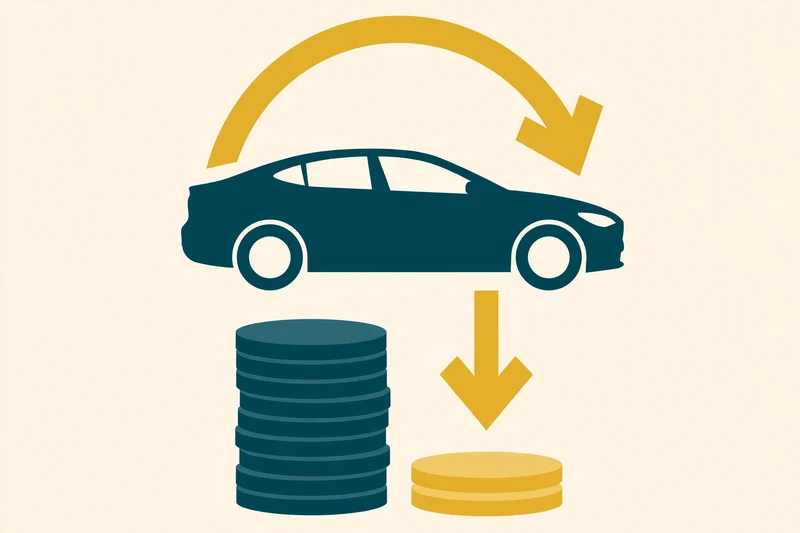
- Refinancing means a new lender pays off your old auto loan; you keep the car and start fresh under new terms.
- It pays when rates have fallen or your credit has improved — our example saves $1,405.
- Shortening the term saves even more: the same example saves $2,280 on a 36-month refinance.
- Most lenders want 670+ credit, a car under 10 years old with under 100,000–150,000 miles, and a balance above $5,000–$7,500.
- Compare APR and total cost, not just the monthly payment — fees included.
What refinancing an auto loan actually means
You apply with a new lender; if approved, it pays off your current loan in full and you repay under new terms. The car stays yours — only the loan changes (Credit Karma’s guide walks through the payoff mechanics).
The four reasons: a lower rate, a shorter term, a lower payment (stretching the term — usually a trap), or removing a co-signer.
When refinancing saves you real money
Three situations make refinancing a genuine win. One: rates dropped. Financing at 9% two years ago when comparable loans now go for 6.5% puts the math on your side. Two: your credit climbed. Moving from 640 to 720 can unlock a meaningfully lower APR. Three: you can afford a shorter term — a higher payment that ends the loan years sooner, often the biggest saving of all.
One caution: a lower payment achieved by stretching the term usually costs more overall — less per month, but for many more months. Always compare total cost, not just the payment.
The worked example: $30,000 at 9%
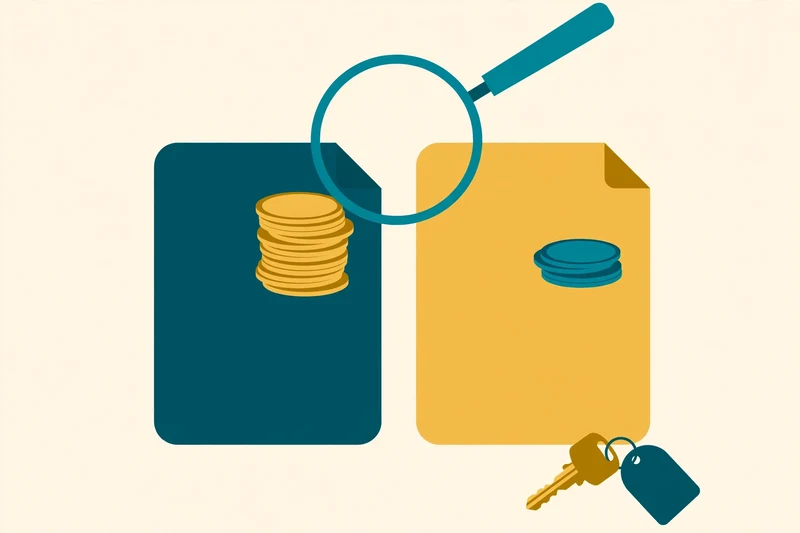
Take a $30,000 car loan at 9% APR over 60 months: $622.75 a month, $7,365.04 of it interest. After 12 payments the balance is $25,025.10 — the number a refinance targets.
| Old loan (remaining) | Refinance: 48 mo at 6.5% | Refinance: 36 mo at 6.5% | |
|---|---|---|---|
| Monthly payment | $622.75 | $593.47 | $766.99 |
| Remaining total | $29,892.03 | $28,486.51 | $27,611.80 |
| Total saving | — | $1,405.52 | $2,280.24 |
At 6.5% over 48 months: the payment falls $29.28 a month, saving $1,405.52 — $1,005.52 after a typical $400 fee. On the 36-month term the payment rises to $766.99, but the saving jumps to $2,280.24 and you finish a year earlier.
When refinancing is a bad idea
It is not always smart. Underwater loans are the big one: owe more than the car is worth and most lenders will not touch it. Fees can eat the saving — subtract origination and title fees before celebrating. Stretching the term for a lower payment usually means more interest overall while the car depreciates — a recipe for going underwater. Check for a prepayment penalty on the old loan (rare, but read the contract). If the net saving is under a few hundred dollars, skip it.
Timing matters too. Refinancing in the final year of a loan rarely pays: most of your remaining payments are principal by then, so there is almost no interest left to save. The sweet spot is usually 12 to 36 months into the loan — early enough that a lower rate still cuts real interest, late enough that your payment history has lifted your credit score into a better bracket.
Do you qualify? Four checks lenders run
Lenders screen four things:
- Credit score. Best rates typically start around 670; refinancing is possible from the low 600s at higher rates. A risen score since purchase is your leverage.
- Vehicle age and mileage. Most lenders cap at around 10 model years and 100,000–150,000 miles. LendingTree’s refinance guide notes limits vary by lender — shop around if your car is borderline.
- Loan-to-value. The car must be worth at least what you owe. Check its value first; if underwater, pay the balance down before applying.
- Loan seasoning and size. Many want the loan 6–12 months old with a balance above $5,000–$7,500, and some will not refinance their own loans — plan to switch lenders.
How to compare refinance offers in five steps
Collect three or more quotes — banks, credit unions, online lenders — then compare. Autotrader’s walkthrough and CNBC Select agree on the essentials:
- Compare APR, not just the payment — it is the only apples-to-apples price of borrowing. Our APR vs interest rate guide explains why.
- Hold the term constant — a longer term disguises a worse deal as a lower payment.
- Add up total cost. Monthly payment × months remaining, plus every fee. The lowest total wins.
- Ask about fees: origination, title transfer, lien recording, and any prepayment penalty all come off your saving.
- Check the payment fits: pick the lowest-total-cost offer your budget absorbs — the 36-month option only works if $766.99 fits.
Apply within a two-week window: multiple inquiries are generally scored as one, so rate-shopping will not tank your score.
Refinancing more than your car?
The same break-even thinking applies to mortgages.
Read the mortgage refinance guideSources & further reading
Process details from lending guides; worked numbers are our own, computed in Python.
- Credit Karma — How to Refinance a Car LoanWhen refinancing makes sense and how the payoff works.
- LendingTree — Auto Loan Refinance GuideEligibility, vehicle limits and lender comparison tips.
- Autotrader — How to Refinance a Car LoanGathering offers and timing the switch.
- CNBC Select — How to Refinance a Car LoanWhen the numbers work, fees, and the rate-shopping window.