What Is Direct Deposit? How It Works and How to Set It Up
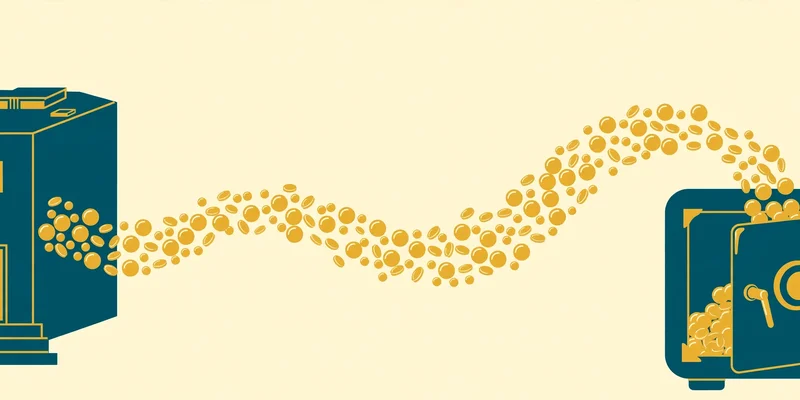
Direct deposit is how most American workers get paid: your employer sends your pay straight into your bank account through the ACH network. It arrives on payday and cannot get lost in the mail.
Key takeaways
- Direct deposit sends your pay electronically into the account you choose.
- Setup needs two numbers, routing and account, plus an authorization form.
- Money lands by payday morning; holidays and first-time setup can delay it.
- You can split one paycheck across several accounts, automatically.
What direct deposit means
Direct deposit is an electronic transfer that sends money straight from a payer into your bank account. The payer is usually your employer, but the same system delivers Social Security benefits, tax refunds, and pensions. Nothing is printed or mailed, so no check can be lost. Nacha, which governs the ACH network, reports 33.6 billion ACH payments worth $86.2 trillion in 2024 alone.
How ACH moves your money
Most direct deposits travel over the ACH network, the batch system American banks use to move money between accounts. A few days before payday, your employer sends its bank a payment file with every employee’s amount and destination account. The employer’s bank passes the file to an ACH operator, which routes each payment to the receiving bank. On the scheduled date, your bank credits your account.
The data file usually reaches your bank before the money settles, the gap behind early direct deposit, and the network pauses on weekends and federal holidays.
How to set up direct deposit
Setup is a one-time task, the same at almost every employer. First, find your bank’s nine-digit routing number and your account number, both on your checks and in your bank’s app. Second, fill in your employer’s authorization form with those numbers, the account type, and your signature.
Some employers request a voided check, a check marked “VOID,” which proves the numbers without being cashable. If you have no checks, ask your bank for a direct deposit letter or print the pre-filled form from online banking. Some payroll systems send a zero-dollar “pre-note” first, so a first deposit can take one extra pay cycle.
One caution: criminals send phishing emails mimicking HR portals to reroute paychecks, so never change deposit details through an emailed link.
When the money arrives
For an established direct deposit, the money is available on payday itself, often by 9 a.m. Under federal rules, banks must make direct-deposit funds available no later than the business day after they receive the payment.
Three things can shift that timing: a weekend or bank holiday, a new setup, and your bank’s own policy. Some banks offer early direct deposit, crediting your account up to two days before the scheduled payday. That early access is the bank’s choice, not a guarantee.
Direct deposit does not change the amount that lands, that is your net pay after withholding, covered in our guide to how much tax is deducted from a paycheck in NY.
Splitting your deposit across accounts
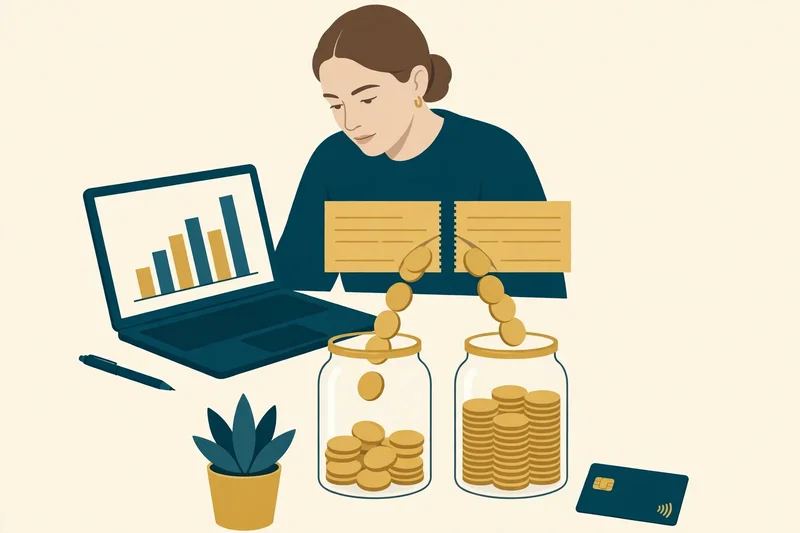
Split deposit is direct deposit’s most underused feature. Instead of sending your whole paycheck to checking, you tell payroll to divide it by a fixed amount or a percentage, automatically, every pay period.
How many accounts you can split across depends on your payroll system, some cap you at two or three. If yours is limited, split into two accounts and move money inside your bank; our guide to starting multiple savings accounts shows how. Tax refunds work the same way: the IRS lets you split a refund across up to three accounts.
Is direct deposit safe?
Yes. A paper check can be lost, stolen, or forged; an ACH transfer has none of those failure points, and it leaves a complete electronic record at both banks. That record makes problems easier to trace than a missing check. The remaining risks are about account access: guard your payroll login, and confirm a deposit landed before closing an old account.
Direct deposit vs paper check vs wire transfer
| Method | Speed | Cost to you | Best for |
|---|---|---|---|
| Direct deposit (ACH) | Payday, or 1–3 business days | Free | Recurring pay and benefits |
| Paper check | Mailing time plus 1–2 days to clear | Free, but costs time | One-off payments, or no bank account |
| Wire transfer | Same day, often within hours | Usually a fee to receive | Urgent, large, one-time transfers |
A paper check still needs recording and reconciling. Our guide to balancing a checkbook covers that routine. Wires are faster than ACH but priced for urgency.
If a deposit is missing or wrong
- Check the calendar. Weekends and bank holidays pause ACH processing.
- Check your pay stub. It shows whether payroll sent the deposit and the destination account’s last digits.
- Confirm the numbers on file. A single mistyped digit is the most common cause of a returned deposit.
- Ask your bank about holds. New accounts and very large deposits can trigger a review hold.
- Keep the old account open until at least one deposit has landed in the new one.
If payroll confirms the money was sent and your bank cannot find it, ask payroll for the ACH trace number.
Bottom line
Direct deposit is your pay arriving as data instead of paper: faster, safer, and automatic once set up. Fill in one form carefully, check the first deposit, and consider splitting it.
Sources & further reading
- Nacha, Same Day ACH, 2024 Results33.6B payments, $86.2T in 2024 (curl: 200, 28 Oct 2026).
- OCC HelpWithMyBank, Direct Deposit AvailabilityAvailable by the next business day (curl: 200, 28 Oct 2026).
- IRS, Direct Deposit Your Refund to Three AccountsSplit up to 3 accounts (curl: 200, 28 Oct 2026).
- Experian, What Is Direct Deposit?1–3 business days (curl: 200, 28 Oct 2026).
- Wisely by ADP, Split Direct DepositFixed amount or percentage splits (curl: 200, 28 Oct 2026).
- Chime Help Center, How Direct Deposit WorksEarly access up to 2 days early (curl: 200, 28 Oct 2026).
This article is general information only and is not financial advice. Check your employer’s payroll policy and your account agreement for the details that apply to you.