How to Start Multiple Savings Accounts (Without the Mess)
Learning how to start multiple savings accounts is one of the highest-leverage moves in personal finance: separate buckets turn vague intentions into labeled, automated progress — an emergency fund that never gets raided, a travel fund that grows on its own, and bills that fund themselves before they come due.
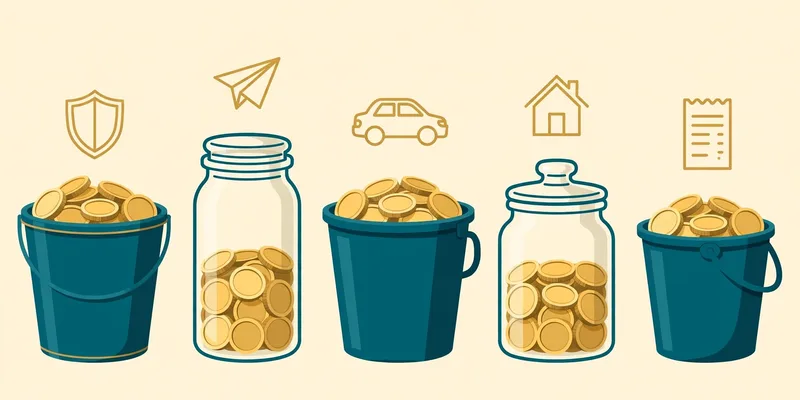
Picture $4,200 in one savings account — emergency fund, March car insurance, and a long-dreamed-about vacation, all in one blurry balance. You cannot tell which dollar is which, so the vacation deal eats the emergency money, and when the insurance bill lands, the vacation money is gone. That is the single-balance trap.
The fix is the bucket strategy: one labeled account per goal, funded automatically. Behavioral economists call the principle mental accounting — money with a job gets spent differently than money in a blurry pile. Raiding “Emergency — Do Not Touch” feels like breaking a promise; raiding a generic balance feels like nothing.
Why one big savings pot quietly sabotages your goals
One balance forces every goal to compete in the dark: your brain sees a single number and the loudest want wins — usually the fun one, right now. An emergency fund buried in that balance has no identity and no protection from your impulses. Separate accounts add friction and clarity. Raiding a labeled emergency fund takes a deliberate transfer, and that pause stops most impulse raids; when the travel bucket shows $900 of a $1,200 goal, the visible finish line keeps you feeding it.
The five buckets most savers actually need
You do not need an account for every expense in your life. These five cover nearly everything:
| Bucket | What it covers | A sensible target |
|---|---|---|
| Emergency fund | Job loss, medical bills, urgent repairs | Starter $1,000, then 3–6 months of essentials |
| Bills & sinking funds | Car insurance, holidays, annual subscriptions, repairs | Expected bills ÷ 12 per month |
| Travel & fun | Vacations, concerts, gifts, hobbies | The price of your next trip |
| Big purchases | Car or house down payment, furniture | 10–20% of the item’s price |
| Taxes (self-employed) | Quarterly estimated tax payments | 25–30% of every client payment |
Build them in order — emergency fund first, since a surprise bill cannot derail you once it exists (Capital One). The bills bucket is a set of sinking funds sharing one home; the tax bucket stops freelancers spending the IRS’s money. A simple budget template keeps all five visible.
Same bank or several banks? How to actually open them
Opening the accounts takes twenty minutes. Step 1: open the emergency account first — high-yield and fee-free, since online banks routinely beat big branch banks. Step 2: nickname everything. “Emergency — Do Not Touch” beats “Savings ****4821”, because the name reminds you what the money is for at the moment of temptation.
Step 3: decide on one bank or several. One bank means one login and instant transfers — simplest, and right for most beginners. Several banks let you shop the best rate per bucket and give each institution its own federal insurance. That insurance detail matters: the FDIC covers $250,000 per depositor, per insured bank, per ownership category. Three accounts in your name at the same bank share one cap — more accounts there buy zero extra protection.
Step 4: keep every account fee-free — a $5 monthly fee drains $60 a year from your goals, so confirm the fee schedule first. Then do the rate-shopping math once: $10,000 for a year at 0.01% APY earns $1; at 4.00% it earns about $400 — a $399 gap for the same money, zero extra risk. Rates move, so check current offers, but never leave five figures earning dust.
Name everything, then automate on payday
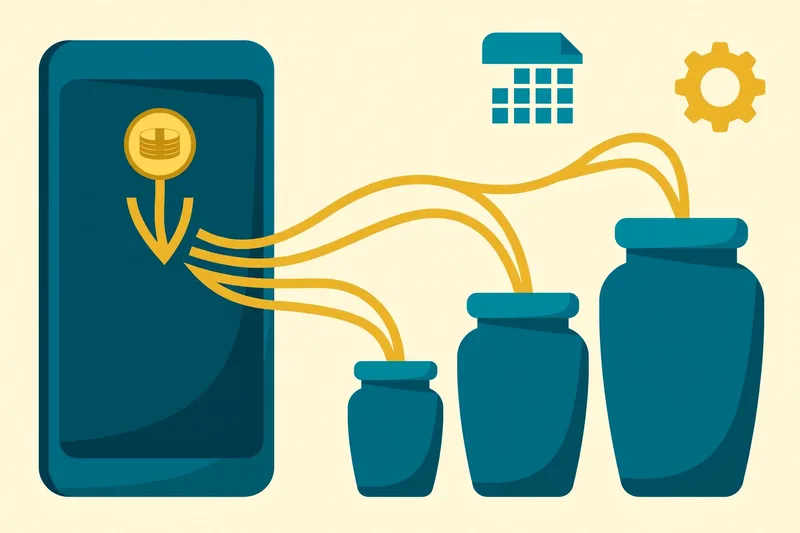
Labels only work if money lands without decisions. Automate transfers for the day after payday — percentages scale with raises. Example: on a $3,200 biweekly paycheck, 10% is $320 a month; send $150 to emergency, $100 to travel, $70 to the car fund. When the emergency bucket fills, redirect its share onward. Review quarterly — and for a playful boost, the 100-envelope challenge can stuff a travel fund with over $5,000 in 100 days.
Chasing the best rate without losing your mind
Rate shopping across banks is sensible — the gap between a 0.01% legacy savings account and a 4% high-yield account is hundreds of dollars a year on a five-figure balance — but there is a point where chasing an extra tenth of a percent costs more in complexity than it earns in interest. A practical rule: park your emergency fund and any large, slow-moving bucket wherever the rate is best, and keep small, fast-moving buckets (monthly bills, short-term goals) at your primary bank for instant transfers. Moving $800 to earn an extra 0.2% gains you $1.60 a year and costs you an afternoon of paperwork; moving $25,000 gains you $50 for the same effort. Match the effort to the balance, and re-check rates once a year rather than once a week.
How many accounts is too many?
Two to five is the sweet spot. You have overshot if you cannot remember what an account is for, you are paying fees on forgotten minimums, or money is spread so thin no bucket grows (GoBankingRates). A savings system should clarify your finances, not become a second job — when in doubt, consolidate to three: emergency, bills, one big goal.
Start tonight: open the emergency account, nickname it, schedule the first transfer. Everything else gets easier once the first bucket is filling itself.