How to Balance a Checkbook: The 10-Minute 2026 Guide
Balancing a checkbook means proving your own transaction register matches your bank’s records — the 10-minute habit that catches pending charges, stray fees and fraud before they cost you money.
What “balancing a checkbook” actually means
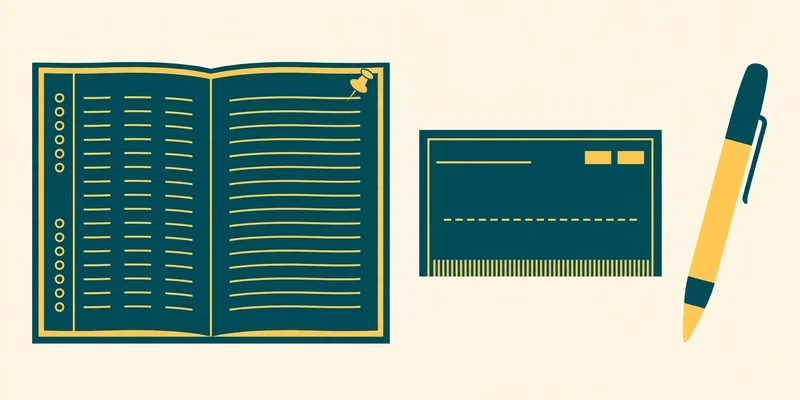
Balancing a checkbook is a comparison between two records of the same money: your register — every deposit, withdrawal, check and fee you recorded — and your bank’s statement of what actually cleared. When the two agree, after adjusting for timing, your checkbook is balanced.
The word “balance” is the confusion: the number in your banking app is a snapshot, not the truth. Card payments take 1–3 days to post, checks take longer, and late-day deposits may not appear until tomorrow. Your register knows about money the bank has not processed yet — which is why the app’s number can mislead you.
Why it still matters in 2026
Three reasons. Pending transactions: the app shows $800 available, but $250 of card spending has not posted — spend the $800 and you have overdrawn. Overdraft fees: the Consumer Financial Protection Bureau found many people hit with overdraft fees were caught off guard, having simply forgotten earlier transactions. Fraud: you know your spending patterns, so small test charges from a stolen card are easier for you to spot than for an algorithm.
It matters doubly for shared money: two people spending from one balance without a shared register is how overdrafts happen — read our guide on what a joint account is before merging finances.
What you need before you start
Three things: your register (the paper booklet, a notebook, our budget spreadsheet, or an app), your latest bank statement, and the ending balance from your last reconciliation. Ten minutes and a quiet table.
The 10-minute method, step by step
1. Record everything since your last balance — every debit, deposit, transfer and fee, from receipts and the app’s pending list, not memory.
2. Check off matches — tick every register line that appears on the statement.
3. List what’s left — unticked items are outstanding checks, deposits in transit, or pending charges.
4. Add bank-only items to your register — monthly fees, interest, or automatic charges you forgot to record.
5. Reconcile: statement balance, plus deposits in transit, minus outstanding checks and pending charges — the result should equal your register balance.
6. Confirm or hunt — match means balanced; otherwise work the checklist below.
A worked example: reconciling to the penny
Statement: $2,511.43. Register: $2,340.18. Two checks haven’t cleared — #1104 ($125.00) and #1107 ($46.25), $171.25 outstanding, no deposits in transit. $2,511.43 − $171.25 = $2,340.18: adjusted statement equals register, balanced to the penny.
| Amount | |
|---|---|
| Statement ending balance | $2,511.43 |
| Minus outstanding checks (#1104 $125.00 + #1107 $46.25) | −$171.25 |
| Plus deposits in transit | +$0.00 |
| Adjusted balance | $2,340.18 |
| Register balance | $2,340.18 |
| Difference | $0.00 |
When it doesn’t balance: the troubleshooting checklist
Do not “fix” a mismatch by editing your register to match the bank — find the real difference. Four clues explain most gaps:
| Clue | Likely cause | Fix |
|---|---|---|
| Off by a multiple of $9 | Transposed digits ($54 instead of $45) | Scan for swapped digits |
| Off by a round amount | Missed bank fee or duplicated entry | Check fees; look for doubles |
| Off by a deposit amount | Deposit doubled or still in transit | Verify against the statement |
| Check cleared for a different amount | Bank error or altered check | Compare the check image; call the bank |
Still stuck? Call the bank with the statement in hand — genuine bank errors are rare but real. And keep reconciling monthly: the next one takes five minutes.
Pending vs posted: the timing trap that catches everyone
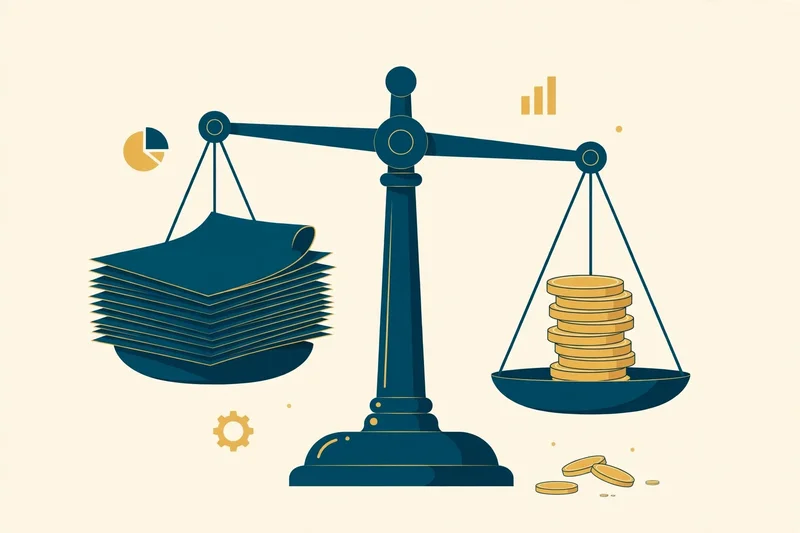
The single biggest source of reconciliation headaches is timing — the gap between when you spend money and when your bank admits it. A debit-card purchase made on Friday night may not post until Tuesday; a check you wrote last week might sit in someone’s drawer for a month. Your register records reality the moment it happens; the bank statement records reality with a delay. Neither is wrong, and the register is the one you should trust, because it always shows the lowest — safest — version of your balance.
Pending transactions deserve a consistent convention in your register. Some people log them immediately and mark them with a small “P”; others keep a separate running “available balance” column. Either approach works as long as it is consistent. The dangerous habit is mental accounting — “I’ll remember that $60 gas station hold” — because you will not, and holds are precisely the transactions that look like duplicate charges or missing money later. One useful rule of thumb: if your register says you have $200 and the bank’s app says $340, you do not have $340. You have $200, minus anything still pending that you forgot to write down. When in doubt, the register wins.
This timing gap is also why “the bank says I’m fine” is a poor overdraft strategy. Banks process transactions in batches and can reorder them — largest first is a common, legal practice that maximizes overdraft fees when a balance goes negative. A register that reflects every pending transaction makes that reordering irrelevant: you simply never spend money that is not truly there. It takes about two weeks of consistent logging for the habit to feel automatic, and most people who stick with it report the same surprise — they had been consistently underestimating how much leaks out in small, forgettable purchases.
Digital alternatives that do the maths for you
Prefer software? Your bank’s own categorisation tools, a budgeting app (see our roundup of the best personal finance apps), or our free budget spreadsheet template all keep a running register for you. But the monthly ten-minute reconciliation still applies — as GOBankingRates notes, you can track everything in an app or notebook, because software records what it sees, and only you know about the check you wrote yesterday.