What Is a Home Warranty? Coverage, Cost & Worth Guide
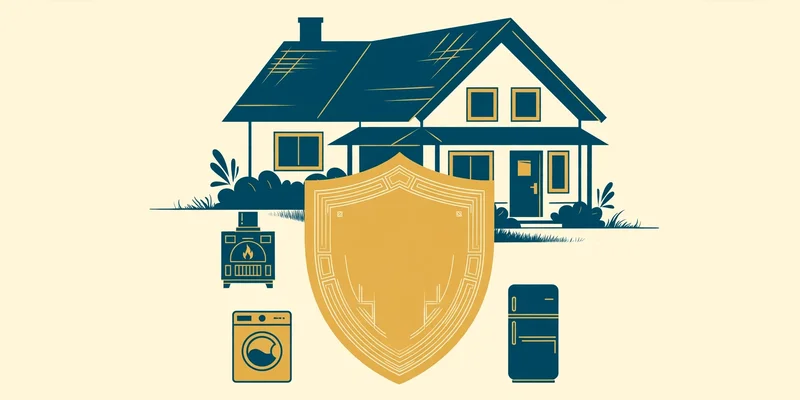
A home warranty is a service contract that pays to repair or replace your home’s major systems and appliances when they break down from normal wear and tear — not insurance, and not a cure-all.
Key takeaways
- A home warranty is a service contract for wear-and-tear repairs — not homeowners insurance.
- Typical plans cover heating and cooling, plumbing, electrical systems, water heaters, and major kitchen and laundry appliances.
- You pay an annual premium plus a service fee per claim, and caps limit what the plan pays.
- It makes most sense for older homes, thin repair savings, or a seller-paid first year.
What a home warranty actually is
A home warranty is an agreement between you and a warranty company: you pay a premium, and when a covered item breaks down through ordinary use, the company pays for the repair or replacement, minus a service fee per visit. The key phrase in almost every contract is normal wear and tear — the gradual deterioration of everyday use (NerdWallet).
That distinction shapes everything else: a fifteen-year-old furnace that dies after years of service is a classic claim; one damaged by a flood or never maintained is not.
What it typically covers
Most companies sell three kinds of plan. Systems-only plans generally cover heating, cooling, electrical systems, plumbing, and water heaters. Appliance-only plans generally cover the oven, range or cooktop, dishwasher, washer and dryer, built-in microwave, garbage disposal, and garage door opener. Combination plans cover both groups (NerdWallet).
Add-ons typically cover pools and spas, septic pumps, well pumps, and limited roof-leak repairs. Do not pay to cover things you do not own: a plan with pool equipment costs more whether or not you have a pool.
What it usually does not cover
Exclusions are where most disappointment comes from. Home warranties generally do not pay for damage from accidents, lack of maintenance, improper installation or repair, or rust and corrosion, and cosmetic damage that does not affect how an item works is not covered either (This Old House). Pre-existing conditions are a standard exclusion too.
Two subtler exclusions: Secondary damage: if a covered appliance leaks and ruins flooring, the warranty typically pays to fix the appliance, not the floor. And caps: each item has a maximum payout, leaving you to pay the rest.
What a home warranty costs
A home warranty has two prices. The first is the premium: published figures put annual costs anywhere from about $250 to $1,900, averaging around $1,100, depending on plan, home, and location. The second is the service fee per visit, typically $50 to $150 per call (Angi). Higher-premium plans tend to charge lower service fees.
Then come the caps. Published analyses describe per-system limits around $1,500 to $3,000, and note that many holders report claims denied or only partly paid (Opendoor). Figures vary by provider, plan, and state, so check any number against your own quote.

How a claim works, step by step
Stay inside the claim process:
- Call the warranty company first. Hiring your own contractor beforehand can void the claim.
- Pay the service fee. This is due per visit, even if the fault turns out not to be covered.
- A network technician diagnoses the fault. You generally do not choose who comes.
- The company authorises repair or replacement, or a cash payment up to the cap if repair is uneconomical.
- You pay anything above the cap, including upgrades or code-compliance work beyond the contract.
Report breakdowns promptly, and keep maintenance records — servicing receipts are your best answer if a claim is questioned on maintenance grounds.
Home warranty vs homeowners insurance
These are distinct products covering different risks. Homeowners insurance covers sudden, accidental damage — fire, storm damage, theft, certain water damage — while a home warranty covers mechanical breakdown from wear and tear. One does not replace the other (NerdWallet). For the insurance side, see our guide to what hazard insurance is.
Home warranty vs a home inspection
An inspection is a snapshot, not protection: an inspector reports a property’s condition on one day, and the report pays for nothing. A warranty is ongoing cover that pays for covered breakdowns during its term. That is why the two often appear together in a purchase.
When it is worth it — and when it is not
A home warranty earns its premium most clearly in three situations. First, an older home with aging systems: a furnace, air conditioner, or water heater past ten years is far likelier to fail. Second, a first-time buyer with thin savings: if one $2,000 repair would go straight onto a credit card, a fixed premium plus a known service fee buys real budgeting certainty — see our guide to buying a house with no money for the wider first-purchase picture. Third, a seller-paid first year: when the seller offers a warranty as a closing concession, the first year costs you nothing.
It is weakest in the mirror-image cases. A newly built home usually already carries builder cover plus manufacturer warranties on appliances, so an extra warranty mostly duplicates protection you already have. A homeowner with a healthy repair fund may do better self-insuring: banking the premium each year builds a fund covering any repair, with no exclusions or caps.
Before you buy: five checks
First, read the exclusions and caps for the items you care about, not just the marketing summary. Second, check whether there is a waiting period before cover starts, and how pre-existing conditions are treated. Third, ask who the contractors are in your area — a thin local network means slow service. Fourth, confirm renewal terms. Fifth, compare the total first-year cost against the single repair you most fear. If you are still weighing the purchase, our guide to how much down payment you need for a $300,000 house covers the upfront cash side.
This article is general information only and is not financial advice. Home warranty terms, prices, coverage limits, and exclusions vary by provider, plan, and state — always read the full contract before buying, and consider independent advice for your situation.