SORN a Car: How to Declare It Off the Road in the UK
A car you are not driving still needs tax and insurance unless you tell the DVLA it is off the road. A SORN does exactly that, and it costs nothing to make.
Key takeaways
- A free DVLA declaration that your vehicle is off the road.
- No vehicle tax, and no legal need for insurance.
- The car must stay on private land, such as a garage or driveway.
- You may only drive it on a public road to or from a pre-booked MOT.
- Taxing the vehicle again ends the SORN automatically.
What a SORN is
SORN stands for Statutory Off Road Notification, a formal declaration to the Driver and Vehicle Licensing Agency (DVLA) that a vehicle will not be driven or kept on a public road. Once recorded, the usual duties of keeping a car on the road no longer apply. Every registered vehicle must either be taxed and insured or declared off the road; simply leaving a car parked and unused does not count. A SORN lasts indefinitely, with no renewal, until the car is taxed again, sold, scrapped or exported. It is not transferable.
When you need to SORN a car
You need a SORN when a car you still own will sit unused off the road: a restoration, a second car, or a vehicle waiting for parts. Make it before the tax expires, as a SORN cannot be backdated. You also need one if your insurance ends and you will not replace it, since a registered vehicle must be insured unless it has a SORN. Do not SORN a car you have sold; tell the DVLA about the sale instead.
How to SORN a car
Only the registered keeper named on the V5C logbook can make a SORN. Have the registration number plus the 11-digit V5C reference, or the 16-digit V11 reference, ready. Online: use the GOV.UK service, enter the details and submit. With a V5C reference the SORN starts at once; with a V11 reference it starts on the first day of next month.
By phone, call the DVLA on 0300 123 4321. By post, complete a V890 form from GOV.UK or a Post Office and send it to DVLA, Swansea, SA99 1AR; the SORN starts when the DVLA receives it, so use recorded delivery. No V5C? Apply by post with a V890, or get a replacement with a V62 form for £25. The declaration is always free.

What you must not do while your car is SORN
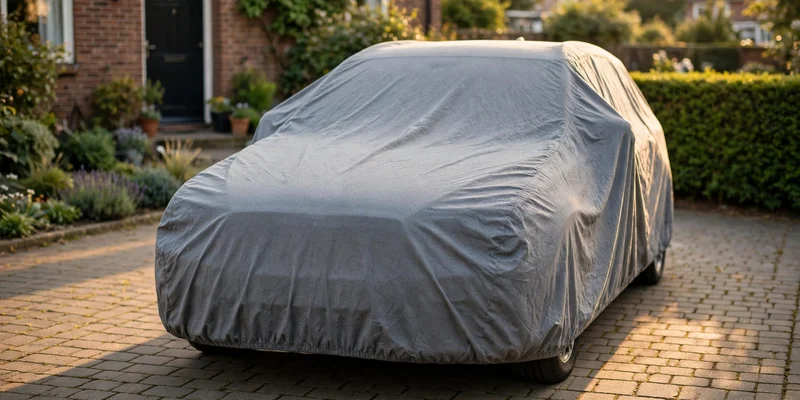
A SORN vehicle must stay on private land at all times: a garage, driveway or private ground. A public road, pavement, grass verge or public car park does not count, so parking on the street for even one night breaks the rules. You must not drive it, or lend it to someone else to drive, except for the pre-booked MOT trip.
Insurance and MOT while your car is SORN
With a SORN in place you need not insure the vehicle, and it needs no valid MOT while off the road. But a SORN does not cancel your policy, so your insurer keeps charging until you tell them. Ask about laid-up cover, cheaper cover against fire, theft and vandalism while the car is stored.
Think before leaving a stored car with no cover: it can still be stolen or damaged by fire or flood. For the MOT, the car needs one before it is driven on a public road again, apart from the drive to a pre-booked test, for which it must be insured.
How to take a SORN off and tax your car again
Tax the vehicle again and the SORN ends automatically; first arrange insurance and a valid MOT, as you cannot tax a vehicle without both.
First arrange insurance, even a short-term policy to reach the test. Then book and pass the MOT if the old certificate has expired. Then tax the vehicle on GOV.UK with the V5C, V11 or new keeper slip reference, and only then drive it on a public road. If a replacement is coming through work, read our guide to a salary sacrifice car before signing, so the timing and tax treatment are clear.
Worked example: what six months off the road could save
Suppose your car costs £180 a year in tax and £600 to insure, garaged for six months. These figures are illustrative, not a quote.
Tax for six months is £180 divided by 12, multiplied by 6: £90 you simply do not pay. Insurance is £600 divided by 12, or £50 a month; laid-up cover at £12 a month costs £72 over six months instead of £300, saving £228. Together the illustrative saving is £90 plus £228, or £318, before any cancellation fee or an MOT due before the car returns.
Penalties for getting SORN wrong
An untaxed vehicle with no SORN brings an automatic £80 fine, reduced to £40 if paid within 28 days. Ignored, it can reach £1,000 in court, and the car can be clamped.
Driving a SORN vehicle anywhere but to a pre-booked MOT can mean prosecution and a fine of up to £2,500, as can parking one on a public road. Driving without insurance adds a minimum £300 fixed penalty and six points.
SORN or cancelling road tax: which one do you need?
A SORN and a tax cancellation both stop road tax, but they answer different questions. Choose a SORN when you still own the vehicle and are keeping it off the road. Choose cancellation when it leaves your hands for good: sold, scrapped or exported. Our guide on how to cancel road tax explains the cancellation side in full.
Sources & further reading
- GOV.UK, Register your vehicle as off the road (SORN)Making a SORN and when it starts (verified 8 Nov 2026).
- GOV.UK, Vehicle taxVehicle tax rules (verified 8 Nov 2026).
- GOV.UK, Check if a vehicle is taxedChecking tax and SORN status (verified 8 Nov 2026).
- Confused.com, How to SORN your carSORN steps and MOT rules (verified 8 Nov 2026).
This article is general information only, not financial advice.