How to Save Money Fast on a Low Income: 12 Quick Wins
Saving fast on a low income is not about willpower or cutting every small pleasure. It is about finding a few larger, one-time wins — a cancelled subscription, a renegotiated bill, an unclaimed benefit — and moving that money aside before it disappears.
Key takeaways
- The fastest savings come from fixed costs — subscriptions, bills, and fees — not daily treats.
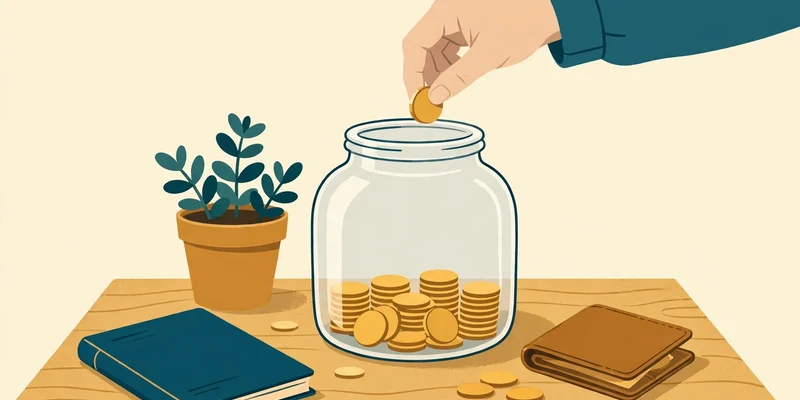
- Start with a $100 buffer, then build toward $500. A small target you reach beats a big one you abandon.
- Automate even $5 per payday into a separate account, so saving happens before spending starts.
- Before cutting essentials, check benefits or discounts you may already qualify for.
The 12 quick wins at a glance
- Cancel forgotten or barely used subscriptions.
- Ask one provider for a lower rate.
- Switch to a no-monthly-fee bank account.
- Cook from food already at home.
- Swap one delivery order for home cooking.
- Wait 72 hours before non-essential purchases.
- Move $5 to $10 to savings on payday.
- Track spending for one week.
- Set aside money for irregular bills.
- Sell one unused item at home.
- Check benefits you may qualify for.
- Claim tax credits you are entitled to.
Start with a target, not a lecture
Advice that starts with “just save 20% of your income” is useless when rent and groceries already take most of it. A better first step is a target sized to your real paycheck. A $100 buffer means a flat tire or a prescription does not have to go on a credit card. After that, $500 covers more of life's ordinary surprises, and $1,000 is a solid first emergency fund.
| Milestone | Illustrative weekly amount | Time to reach it |
|---|---|---|
| $100 buffer | $10 a week | 10 weeks |
| $500 starter fund | $20 a week | 25 weeks |
| $1,000 emergency fund | $20 a week | 50 weeks |
The weekly amounts above are illustrative, not promises: use whatever your budget honestly allows, even $5 a week. What matters is that the amount is regular and the account is separate from everyday spending.
Wins 1–3: the same-week sweep
Open your bank or card statement and list every recurring charge. Streaming services, apps, and memberships you forgot about are the classic leaks — three $10 to $15 charges add up to $30 to $45 a month, every month. Cancel anything you have not used in the past month, and keep only services you would genuinely miss.
Next, call one provider — phone, internet, or insurance — and ask about a cheaper plan or loyalty discount. One successful call can save more in a year than a month of skipping small treats.
Finally, check what your bank charges. Monthly maintenance fees, overdraft fees, and ATM fees quietly drain low balances. Many banks waive a maintenance fee with direct deposit, and some accounts charge none at all. Switching accounts takes an afternoon, and it keeps paying you every month.
Wins 4–6: food, transport, and the 72-hour rule
Food is usually the second-biggest flexible expense, but saving here does not mean eating badly. Cook from what is already in the cupboard and freezer before shopping. For more grocery tactics, see our guide to smart ways to save money on groceries.
Delivery is the expensive part of eating, not the food itself. Fees, tips, and marked-up menu prices can easily double a meal's cost. Swapping just one delivery order a week for home cooking is often worth $20 to $40 a month in illustrative savings, depending on what you usually order.
For everything else, try the 72-hour rule: when you want something non-essential, wait three days before buying it. Most impulse wants fade, and the ones that survive are usually worth having. Move the money you did not spend into savings the same day.
Wins 7–9: pay yourself first, and make it automatic
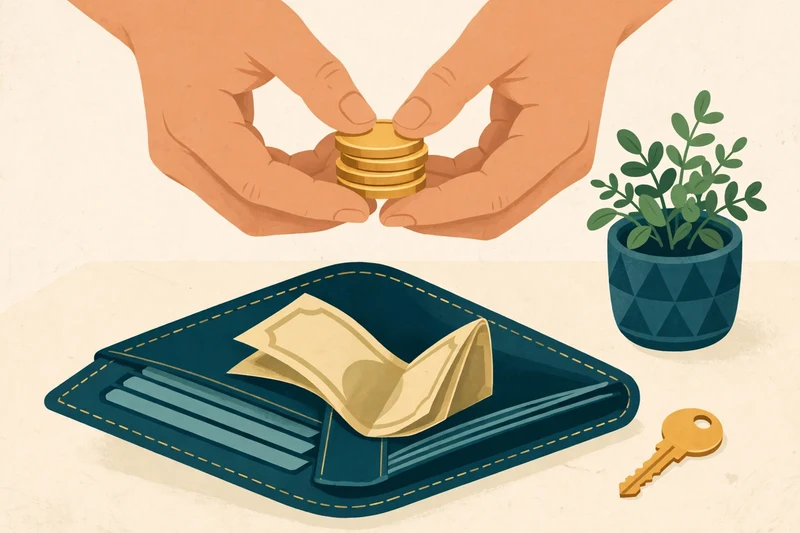
Instead of saving whatever is left at month's end — usually nothing — move a small amount to savings the moment you are paid, then live on the rest. Even $5 per biweekly paycheck is $130 a year, and the habit matters more than the starting amount.
Automation makes it stick: a recurring payday transfer to a separate savings account removes the in-the-moment decision. If your income varies, set the transfer to your lowest typical paycheck and add extra in better weeks. A simple budget template can show where that $5 or $10 can come from without guessing.
Irregular bills — car repairs, annual subscriptions, school costs — wreck otherwise good months. Setting aside a little for each one as you go, rather than scrambling when it arrives, is the idea behind sinking funds. Even $10 a month per upcoming bill turns a crisis into a planned payment.
Wins 10–12: find money you are already owed
Before cutting essentials, check whether a program can lower a bill you already pay. The federal benefit finder at USA.gov points you toward programs based on your situation, and food assistance is explained at USA.gov's food stamps page.
Phone and internet costs have their own discount: the Lifeline program offers a monthly discount on phone or broadband service for qualifying low-income households, as described by the Universal Service Administrative Company. At tax time, check whether you qualify for the Earned Income Tax Credit, explained in full by the IRS — and do not assume you are ineligible.
Finally, look around your home. An unused phone, bike, or tools can become starter savings in a weekend and fund that first $100 buffer while slower habits take hold. If a celebration is coming up, plan early with our guide to saving money for holidays.
What to do when nothing is left after bills
If your budget genuinely has no room after rent, food, utilities, and transport, cutting alone cannot fix it. The wins above still help — a benefit claim or a cancelled fee creates room where none existed — but the bigger lever is income: an extra shift or overtime. Do not borrow from a high-cost lender to “save”; that trades a small buffer for a larger debt. Start with the $100 target and raise it only when a bill cut or benefit frees up cash.
This article is general information only and is not financial advice. Program rules and eligibility change, so check the official source before applying.