How to Reduce Closing Costs: 5 Proven Ways to Pay Less
Closing costs add 2–5% of the loan amount on top of the home’s price — $8,000 to $20,000 on a $400,000 house, due in full at closing. But unlike the down payment, this bill is negotiable. Here are five proven ways to reduce it, plus what each fee pays for so you know where the savings hide.
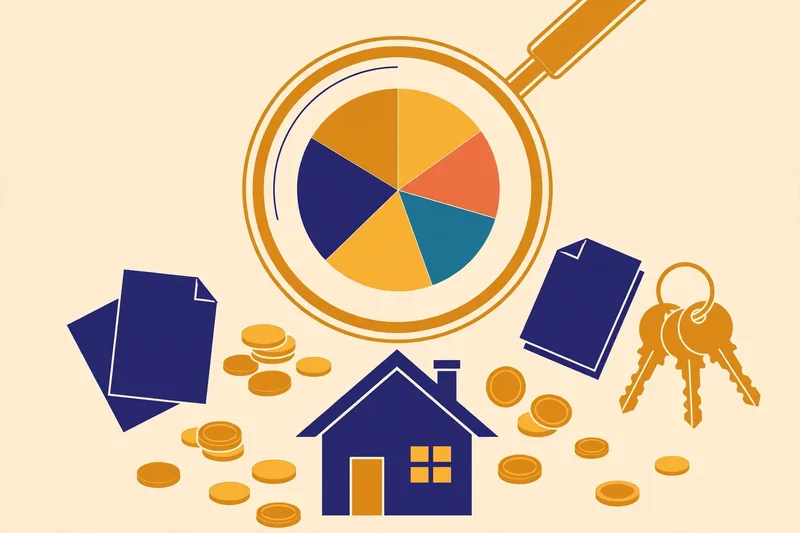
Key takeaways
- Closing costs are negotiable: these five tactics can cut the bill by thousands.
- The bill typically runs 2–5% of the loan amount — $8,000 to $20,000 on a $400,000 loan.
- Collect Loan Estimates from three lenders: origination and title fees vary enormously.
- Ask about seller concessions or lender credits — both shift costs off closing day.
Five ways to reduce your closing costs
1. Shop multiple lenders. Lender fees vary enormously. Collect at least three Loan Estimates and compare them side by side — the CFPB’s Loan Estimate guide shows what to compare.
2. Negotiate the fees. Origination, application and courier fees are often flexible. Ask for a reduction or a waiver.
3. Ask for seller concessions or lender credits. Both shift part of the bill off closing day; weigh the long-term cost of a higher rate.
4. Skip discount points if you may move soon. Points only pay off if you keep the loan long enough to earn them back.
5. Close near month-end. Prepaid interest accrues from closing day to month-end, so closing later means less interest due at the table.
What closing costs actually are
Closing costs are the one-time fees that finalise your mortgage: what the lender, the title company, the government and third parties charge to fund the loan and transfer the deed. You pay them once, on closing day, by cashier’s check or wire. Every charge is itemised on the Closing Disclosure, a standardised five-page form you receive at least three business days before closing — read it carefully. The CFPB’s Closing Disclosure explainer walks through it line by line.
Where the money goes: the fee breakdown
National data from the Urban Institute and Fannie Mae splits buyer closing costs into four buckets (percentages of the loan amount):
Lender origination charges: 0.5–1%
The lender’s fee for underwriting your loan — sometimes a flat origination fee, sometimes discount points. One point costs 1% of the loan and typically buys the rate down by about 0.25%. Points only make sense if you keep the loan long enough to earn them back: on a $320,000 loan, one point costs $3,200. Our refinance calculator shows how rate differences compound.
Settlement and title: 0.5–1%
Title search, lender’s title insurance, settlement fees and recording charges. The search confirms nobody else claims the property; the insurance protects the lender if a claim surfaces later. Shop for your own title services — the fee is marked as shoppable on your Loan Estimate.
Taxes and government fees: 0.38–0.71%
A LodeStar 2026 report finds closing costs average only about 1% of the sales price nationally, but transfer taxes drive the variation: New York and Pennsylvania are expensive; Texas, with no transfer tax, is cheap.
Prepaids and escrows: 0.88–2.93%
The largest bucket, and the most misunderstood. This is not a fee — it is money the lender collects upfront for your first months of homeowner’s insurance, property taxes and prepaid interest, held in escrow. It still leaves your pocket on closing day, so budget for it. Our PITI guide explains how taxes and insurance layer onto the monthly payment.
A worked example: closing costs on a $400,000 home
Buy a $400,000 home with 20% down: your loan is $320,000, so the 2–5% rule gives $6,400 to $16,000 (LendingTree’s version: $8,000 to $20,000 on a $400,000 loan). Where you land depends on your state’s taxes, your lender’s fees, and whether you buy discount points. Run your exact numbers with our free closing costs calculator before you make an offer.
Who pays what: buyer vs seller
Buyers pay the lender and title fees, appraisal, prepaid interest and escrow deposits. Sellers pay a 5–6% agent commission, owner’s title insurance, transfer taxes and any HOA arrears. But the split is negotiable: in buyer-friendly markets, sellers often agree to seller concessions — credits toward the buyer’s costs for a slightly higher price. Conventional rules cap concessions at 3%, 6% or 9% of the price depending on down payment; FHA allows 6%; VA places no cap on standard costs. A lender credit is the mirror image: the lender covers costs for a slightly higher rate.
Estimate yours before you offer
Enter the home price, loan details and your state to see every fee — no surprises at the closing table.
Open the closing costs calculatorSources & further reading
Every external figure in this guide comes from one of these. Fee ranges move with lender pricing and state law.
- LendingTree — How much are closing costs?2–5% of loan amount; $400,000 loan example; Urban Institute/Fannie Mae fee-bucket data; seller-concession caps; April 2026.
- SoFi — Typical home buying closing costs2–5% of principal; $300,000 loan example; discount-point maths; buyer/seller cost split; September 2026.
- National Mortgage Professional — LodeStar 2026 report~1% of sales price nationally; transfer taxes drive state variation (NY/PA high, Texas low).
- CFPB — What is a Closing Disclosure?Five-page form with final loan terms and costs; delivered at least three business days before closing.
- CFPB — What is a Loan Estimate?Standardised three-page form for comparing lenders; issued within three business days of application.
Frequently asked questions
How can I reduce my closing costs?
Shop at least three lenders and compare Loan Estimates, negotiate origination fees, ask for seller concessions or lender credits, skip discount points if you may move soon, and close near month-end to cut prepaid interest.
How much are closing costs on a $400,000 house?
Typically $8,000 to $20,000 — 2–5% of the loan amount. Your exact total depends on state transfer taxes, lender fees and whether you buy discount points.
Can closing costs be rolled into the mortgage?
Sometimes. Lender credits and seller concessions can cover costs at the price of a higher rate or purchase price, and FHA/VA loans allow some costs to be financed. Rolling costs in means paying interest on them for years — compare the lifetime cost.
Who pays closing costs, the buyer or the seller?
Both. Buyers pay lender, title and prepaid fees (2–5% of the loan); sellers pay agent commission (5–6%), transfer taxes and owner’s title insurance. The split is negotiable in the purchase agreement.
Are closing costs tax deductible?
Mostly not. Origination, appraisal, title and recording fees are not deductible. Discount points and prepaid mortgage interest generally are, for a primary residence — confirm with a tax professional.