How Much Is PMI Per Month? What You’ll Pay in 2026
Put less than 20% down on a conventional mortgage and a quiet extra line joins your monthly payment. It isn’t principal, interest, tax or insurance — it’s PMI, private mortgage insurance, and on a typical loan it adds roughly $150 to $250 a month. Here is exactly how that figure is set, how long you’ll pay it, and five legitimate ways to shrink it or avoid it entirely.
Key takeaways
- PMI typically costs 0.5%–1% of the loan amount per year — roughly $30–$70 a month for every $100,000 borrowed, per Freddie Mac.
- On a $300,000 loan at a 0.60% PMI rate, that is $150 a month — over $17,000 if it stays on the loan until year eight.
- Your rate hinges on credit score, down payment size and loan type: a 760+ score can mean a fraction of the rate a high-600s score pays.
- Federal law lets you request cancellation at 80% loan-to-value and forces automatic termination at 78%, as long as you are current on payments.
The insurance that protects your lender — not you
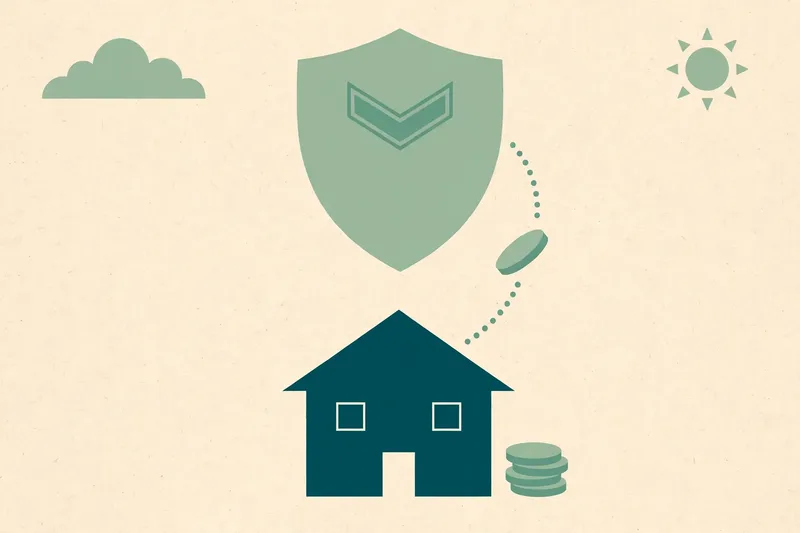
Start with the uncomfortable truth: private mortgage insurance protects the lender, not you. If you default and the foreclosure sale doesn’t cover the balance, the policy makes the lender whole — your credit still takes the hit and you still lose the home. The Consumer Financial Protection Bureau states it plainly: mortgage insurance, no matter what kind, protects the lender in the event you fall behind.
Without it, lenders wouldn’t approve most loans below 20% down. PMI is the price of buying years earlier than saving a full fifth of the price would allow: required below 20% down on conventional loans and billed as its own monthly line item.
The formula behind your monthly PMI bill
The maths is simple; the rate is the mystery. Annual PMI = loan amount × PMI rate, divided by 12. The typical rate is 0.5% to 1% per year (the full market range runs about 0.3% to 1.5%). Freddie Mac’s rule of thumb: roughly $30 to $70 a month for every $100,000 borrowed.
- $300,000 loan at 0.60% → $1,800 a year → $150/month.
- $315,000 loan (10% down on $350,000) at 0.65% → $171/month.
- $450,000 loan, weaker credit, at 1.00% → $375/month.
Borrower-paid PMI is usually fixed — it doesn’t shrink as your balance drops. At $171 a month, reaching 80% loan-to-value takes roughly eight years on a 10%-down loan: about $17,000 in premiums. Your exact rate must appear on the Loan Estimate — compare lenders.
What pushes your rate up or down
- Credit score — the biggest lever. Above 760 can mean 0.19%; the high 600s can mean 1% or more. Same loan, $50 versus $300 a month.
- Down payment — 15% down is much cheaper to insure than 5% down.
- Loan term and type — a 15-year term beats a 30-year one; adjustable-rate structures price differently.
You don’t choose the insurer — the lender does. You do choose the lender, so shopping the Loan Estimate counts double.
The two numbers that end PMI: 80 and 78
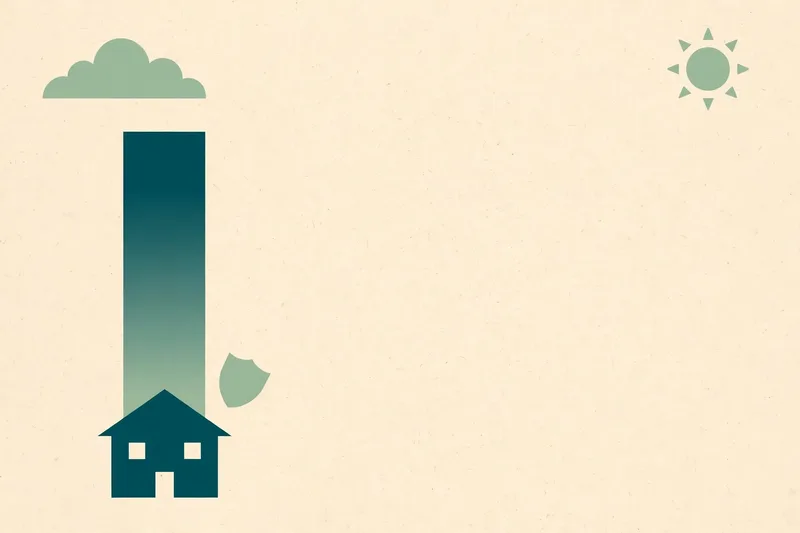
PMI isn’t forever. The Homeowners Protection Act of 1998 gives two exits, measured against the original home value:
- 80% — you can ask. Once the balance is scheduled to reach 80% of the original price, request cancellation in writing. The lender may require an appraisal and current payments.
- 78% — automatic. The servicer must terminate PMI with no request needed, provided you are current.
Extra principal payments and price appreciation accelerate this — a new appraisal showing 20%+ equity can support early cancellation. Caution: with less than 10% down, FHA mortgage insurance never cancels; refinancing conventional is the escape.
Five legitimate ways to pay less PMI — or none at all
1. Put 20% down. The only way to guarantee zero PMI from day one — and the reason most first-time buyers can’t do it.
2. Pay principal faster, then ask. Extra payments reach 80% loan-to-value early; request cancellation in writing and stay current.
3. Consider a piggyback loan — carefully. An 80-10-10 avoids PMI, but second mortgages carry higher rates; the CFPB warns to compare the total cost first.
4. Restructure how PMI is paid. Lender-paid PMI folds the cost into a slightly higher rate; single-premium is one lump sum at closing; split-premium blends both. Match the structure to how long you’ll keep the loan.
5. Refinance out of it. At 20% equity, refinancing conventional drops PMI — also the escape from lifetime FHA insurance. Ensure closing costs don’t eat the saving. VA loans charge no monthly mortgage insurance at all.
See PMI inside your payment
Enter a home price and down payment to see the true monthly cost — principal, interest, taxes, insurance and PMI together.
Open the mortgage calculatorSources & further reading
Every external figure in this guide comes from one of these. The worked examples are our own arithmetic, shown in full above.
- CFPB — What is mortgage insurance and how does it work?Mortgage insurance protects the lender, not the borrower; required below 20% down on conventional loans; VA loans carry no monthly premium. (Reviewed Aug 2026.)
- FastExpert — Private Mortgage Insurance: everything you need to knowPMI range 0.46%–1.50%/yr; ~$30–$70/month per $100,000 borrowed; 80%/78% cancellation thresholds under the Homeowners Protection Act.
- BestMoney — How to avoid PMI: 2026 strategiesFreddie Mac’s $30–$70 per $100,000 figure; the four PMI structures (monthly, upfront, split-premium, lender-paid).
- The Mortgage Reports — Private mortgage insurance guidePMI formula (loan × rate ÷ 12) and the $250,000 / 5%-down / $103-a-month worked example.
Frequently asked questions
How much is PMI per month on a $300,000 loan?
At the typical 0.5%–1% annual range, roughly $125 to $250 a month — about $150 at a 0.60% rate with good credit.
When does PMI go away automatically?
Under the Homeowners Protection Act, your servicer must automatically terminate PMI at 78% of the original home value if you are current — and you can request cancellation at 80%. FHA loans with less than 10% down are the exception: their insurance doesn’t cancel without refinancing.
Can I avoid PMI without a 20% down payment?
Yes: a piggyback (80-10-10) loan, lender-paid PMI, or a VA loan if eligible. The CFPB cautions that piggyback structures aren’t automatically cheaper — compare total costs first.
Does PMI protect me if I can’t make payments?
No. PMI protects only the lender — if you default, the policy covers the lender’s loss while your credit is damaged and you lose the home.
What’s the difference between PMI and MIP?
PMI is for conventional loans and cancellable at 80% loan-to-value. MIP is for FHA loans and, with less than 10% down, lasts the life of the loan unless you refinance.