How Much Money Should I Have Saved by 30: Age Targets
Turning 30 comes with a simple but loaded question: are you on track? The best-known answer is one year's salary saved for retirement — but that number only helps if you know what counts, what it assumes, and what to do when you are not there yet.
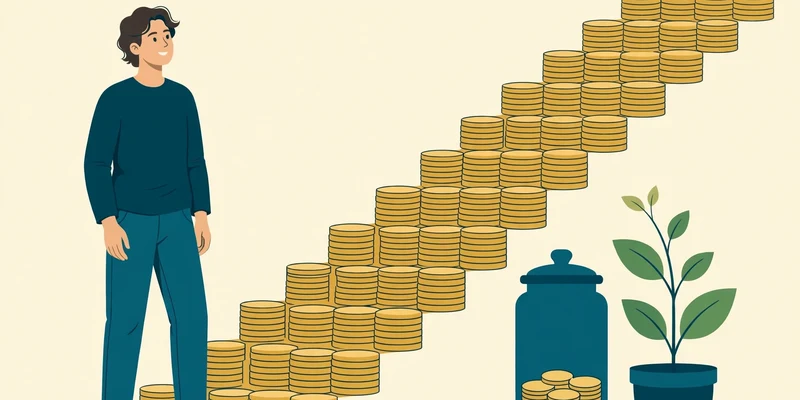
Key takeaways
- The widely used Fidelity guideline is 1 times your annual salary saved for retirement by age 30.
- Count retirement and investment savings toward the target — not your emergency fund, and not home equity.
- The guideline assumes steady saving from your mid-20s; a late start changes the maths, not the possibility.
- If you are behind, capture the full employer match, automate contributions, and raise your rate with each raise.
The short answer: aim for one year's salary
The most widely cited age-30 target comes from Fidelity Investments: aim to have retirement savings equal to one times (1x) your annual salary by age 30. Experian summarises the same guideline and notes that it is a popular rule of thumb, not a personal promise — everyone's circumstances differ. Experian's guide to savings by age 30 also reports a second view: T. Rowe Price advises half a year's salary by 30, rising to 1.5 times salary by 35, giving a late starter more runway.
Why do two respected firms differ? A guideline is a model, not a measurement of you: it assumes a start age, a savings rate, investment returns, and a retirement age. Change any of those, and the "right" number moves. Treat 1x as a checkpoint, not a pass mark.
For scale, Experian cites Bureau of Labor Statistics data putting median annual earnings for 25- to 34-year-olds at $59,280 in the first quarter of 2026 — making the typical 1x target roughly $60,000. SoFi puts the figure for an average 30-year-old at about $54,000. SoFi's guide to how much to save by 30
What 1x your salary looks like in practice
The table below is illustrative: it simply multiplies each salary by one. Use your actual gross annual salary for your own target, not a national average.
| Annual salary (illustrative) | 1x target by age 30 |
|---|---|
| $40,000 | $40,000 |
| $50,000 | $50,000 |
| $60,000 | $60,000 |
| $75,000 | $75,000 |
| $100,000 | $100,000 |
What counts toward the target — and what does not
Count money saved and invested for retirement: workplace plan balances, individual retirement accounts, and other long-term investments earmarked for retirement. That is the pot the guideline measures.
Do not count your emergency fund. It has a different job — covering a job loss or unexpected bill without forcing you to raid retirement money. GOBankingRates recommends three to six months of expenses in a liquid account for that safety net, and stresses that the employer match comes first. GOBankingRates' guide to saving by 30
Do not count home equity either: you cannot spend it in retirement without selling or borrowing against it. The cleanest check is to add up retirement accounts and long-term investments and compare that total with one year's gross salary.
How to check where you stand in ten minutes
- Find your salary figure. Use your current gross annual salary, before tax. If your pay recently changed, use the current figure; the target moves with income, which is normal.
- Add up the right accounts. Note each retirement and investment account balance and add them together. Leave your emergency fund and everyday checking balance out of this total.
- Divide the total by your salary. A result of 1.0 means you are at the guideline; 0.5 means halfway there; 0.2 means a fifth of a year's salary saved. Write the number down, with today's date, so next year's check is a comparison rather than a guess.
That ratio beats a raw dollar figure, because it adjusts for income: $30,000 saved on a $45,000 salary (0.67x) is closer to the guideline than $50,000 on $120,000 (0.42x).
Behind at 30? Five catch-up moves that actually help
Being behind at 30 is normal — student loans, low starting salaries, and career changes all push the first checkpoint back. These moves, in order, give the best return on effort:
- Capture the full employer match. Skipping the match is the one mistake that is hard to undo later.
- Automate the contribution. Money moved on payday never gets the chance to be spent.
- Raise your rate with each raise. Send part of every pay rise to savings before spending adjusts to the new income. Even one extra percentage point a year compounds over decades.
- Tackle high-interest debt in parallel. Clearing expensive debt frees cash flow for future contributions.
- Choose where the savings live deliberately. Tax treatment differs between account types, so where you hold the money matters as much as how much you save — our comparison of Roth vs 401(k) accounts explains the trade-off in plain terms.
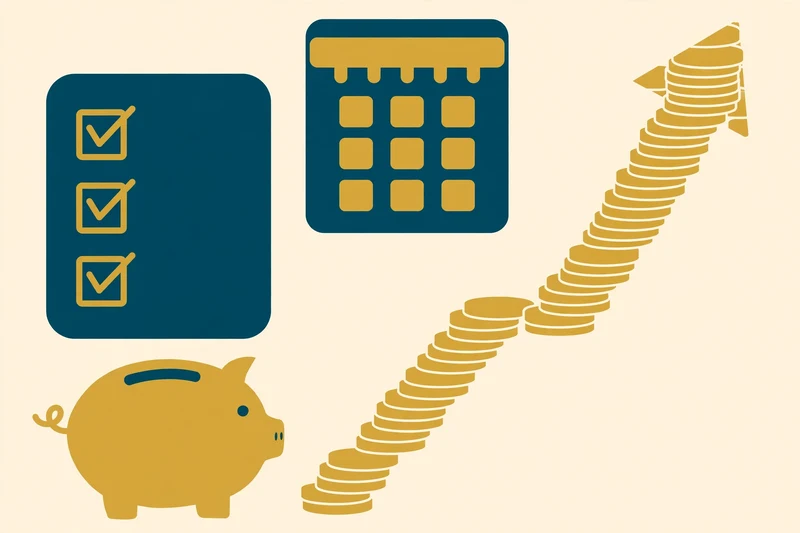
At 30, you still have roughly three and a half decades before a typical retirement age — which is why a steady monthly contribution started now can still build a large sum.
What the age-30 target does not tell you
First, it says nothing about the rest of your financial life: you can hit 1x and still be fragile with no emergency fund or high-interest debt. Second, it is a single snapshot — the same guideline family rises steeply in later decades, so the work continues. Third, it does not account for a pension or an early or late retirement, which can move your personal target above or below 1x.
Keep later-life rules in their proper place: the rule of 55 affects how you might access savings in your mid-50s, not what to aim for by 30. Likewise, household targets differ from an individual checkpoint — our guide to average retirement savings for married couples by age covers that angle separately, and its averages should not be mixed with the 1x guideline here.
The bottom line for your 30s
Aim for one year's salary saved for retirement by 30, count only retirement and long-term investment money, keep your emergency fund separate, and judge yourself by the ratio, not by someone else's balance. If you are there, protect the habit. If you are not, start with the match, automate the next step, and raise the rate when pay rises.
This article is for general information only and is not financial advice. Savings targets are guidelines based on broad assumptions; your personal target depends on your income, spending, debts, health, and retirement plans.