Gap Insurance Cost: Dealer vs Insurer Prices in 2026
The same gap insurance can cost $20 a year or $700 in one payment, depending on where you buy it. Here is what gap insurance costs in the US, what drives the price up or down, and whether it is worth paying for.

Key takeaways
- Gap insurance costs about $20 to $60 a year from your auto insurer, or $400 to $700 as a one-time dealer fee.
- The dealer price is the same cover at roughly 5 to 10 times the insurer price, and financing it adds interest.
- Credit unions and standalone providers usually sit in the middle, often $200 to $400 one time.
- The price depends on the car value, your loan term, your down payment, and your state.
- It is usually worth it for the first two or three years of a long loan with a small down payment, and worth cancelling once you owe less than the car is worth.
How much does gap insurance cost?
It depends far more on where you buy it than on what it covers. Added to an existing auto policy, gap insurance typically costs about $20 to $60 a year. The Insurance Information Institute puts the add-on at about $20 a year on most policies that already include collision and comprehensive cover. CarInsurance.com 2026 rate data puts the average at $99 a year, with a range of $35 to $208 by insurer and state.
Bought from a car dealer, the same protection is a one-time fee of $400 to $700, and some dealers charge up to $900. That is the whole story: a few dollars a month from your insurer, or several hundred dollars in one payment at the dealership.
The cover is the same in most cases: it pays the difference between what you still owe and what your insurer pays for the car actual cash value after a total loss or theft. Our guide to what gap insurance covers explains the protection itself; this guide is only about the price.
Gap insurance from your auto insurer
Your own auto insurer is almost always the cheapest place to buy gap insurance. It is sold as a small add-on rider on a policy that already has collision and comprehensive cover. The insurer prices it as a small percentage of your collision and comprehensive premium, usually around 5 to 7 percent, so the cost stays low.
It is flexible: add it after you buy the car, and drop it the moment you no longer need it, usually with a prorated refund. That matters, because gap cover is temporary: once you owe less than the car is worth, it pays nothing. Not every insurer sells it, and some only offer it on new cars, so ask first.
Gap insurance from the dealer
The dealership finance office will offer gap cover at signing. The typical dealer fee is $400 to $700. The fee is usually rolled into your car loan, so you pay interest on it: a $700 dealer policy financed into a 60-month loan at 6.56 percent APR costs about $823 by payoff, $123 of it interest.
One more wrinkle: dealer gap is sometimes a debt waiver agreement, not actual insurance, with different terms and refund rules. Read the contract before you sign.
Gap insurance from a credit union or lender
If your loan comes from a credit union, ask the credit union first: they typically charge a one-time fee in the low hundreds of dollars, often $200 to $400, well below the dealer price. Standalone gap providers, bought online after you own the car, charge about $150 to $300 one time, with no interest added because you pay up front. Check the provider is licensed in your state, and read the exclusions.
What affects the price of gap insurance?
Five things decide where you land inside that range:
- Your car value and how fast it loses value: a fast-depreciating luxury car or electric vehicle costs more to cover than a $25,000 sedan that holds its value.
- Your loan term: a 72- or 84-month loan keeps you owing more than the car is worth for years.
- Your down payment: under 20 percent down means you start underwater on day one.
- Your state: gap cover is under $40 a year in West Virginia and Iowa, and over $200 a year in Missouri and Montana, per CarInsurance.com.
- Your insurer and driving record: the add-on is priced off your collision and comprehensive premium.
Edmunds found 29.6 percent of trade-ins toward new-vehicle purchases in the second quarter of 2026 carried negative equity, with an average shortfall of $6,884, a record for a second quarter.
When gap insurance is worth the money
Gap insurance is worth paying for when you owe more than the car is worth and could not cover the difference yourself: less than 20 percent down, a loan of 60 months or longer, negative equity rolled in from a trade-in, or a lease. If your car is totalled in that window, the gap can run into thousands of dollars.
It is not worth it when there is no gap to insure: 20 percent or more down on a short loan, a car that holds its value, or a loan balance already below the car value. Compare your loan payoff figure with the car current value: if the payoff is lower, you do not need it.
How to get the cheapest gap insurance
First, call your auto insurer before you go to the dealer; that quote is your benchmark. Second, say no to the dealer version at signing, because you can almost always buy it later for less. Third, check your credit union if you financed through one. Fourth, compare a standalone provider if your insurer does not sell it. Buyers with bad credit buying a car should be especially careful, since long, high-rate loans keep you underwater longest.

Whatever you buy, check the fine print first: does it cover your deductible and any negative equity rolled in from a trade-in, and how do you cancel and claim a refund?
When to cancel gap insurance
Cancel it the day your loan balance drops below the car value, usually around year two or three. Check every six months by comparing your lender payoff figure with the car value on Kelley Blue Book or Edmunds. Removing insurer gap is usually a phone call; for a dealer policy, ask for a prorated refund of the unused portion, which many buyers never do.
Sources & further reading
- NerdWallet, What Is Gap Insurance?Verified 12 Nov 2026.
- Insurance Information Institute, What Is Gap Insurance?Verified 12 Nov 2026.
- CarInsurance.com, How Much Is Gap Insurance?Verified 12 Nov 2026.
- CarInsurance.com, Where to Buy Gap InsuranceVerified 12 Nov 2026.
- Edmunds, Q2 2026 Negative Equity ReportVerified 12 Nov 2026.
- BeSecuredNow, Gap Insurance ExplainedVerified 12 Nov 2026.
This article is general information only, not financial advice.
Worked example: a $25,000 car that gets totaled
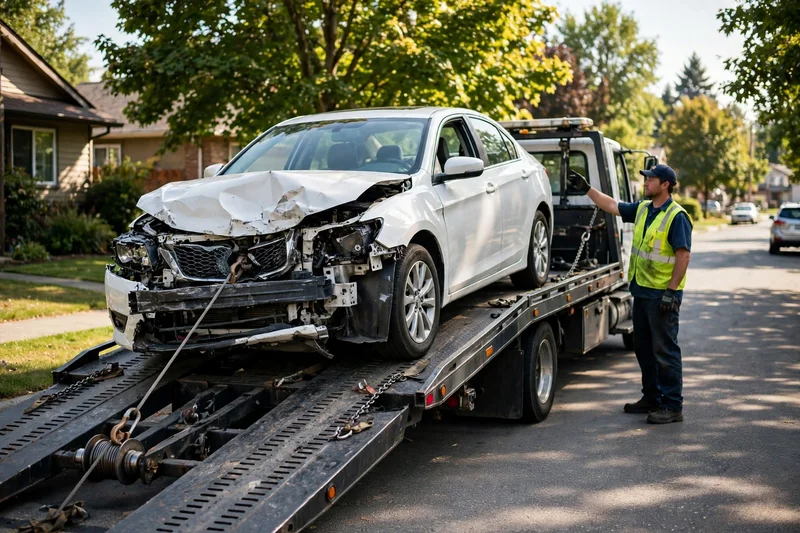
Take an illustrative example. You buy a $25,000 car with $2,500 down and finance the rest. Eighteen months later the car is totaled. Your loan balance is still $21,000, but your insurer values the car at $17,500, so the gap is $3,500: $21,000 minus $17,500. Without gap cover you would still owe that $3,500 on a car you can no longer drive. With gap cover, the insurer pays the $17,500 and the gap policy pays the $3,500, clearing the loan in full.
Now compare what that cover would have cost. Bought from the dealer at $600 as a one-time fee, it is $600. Bought from your auto insurer at $40 a year and kept for three years, the total is $120. Same protection, same $3,500 payout, $480 less: $600 minus $120. That is the whole point of this guide. Gap insurance is cheap protection when you buy it in the right place, and an expensive add-on when you do not.